
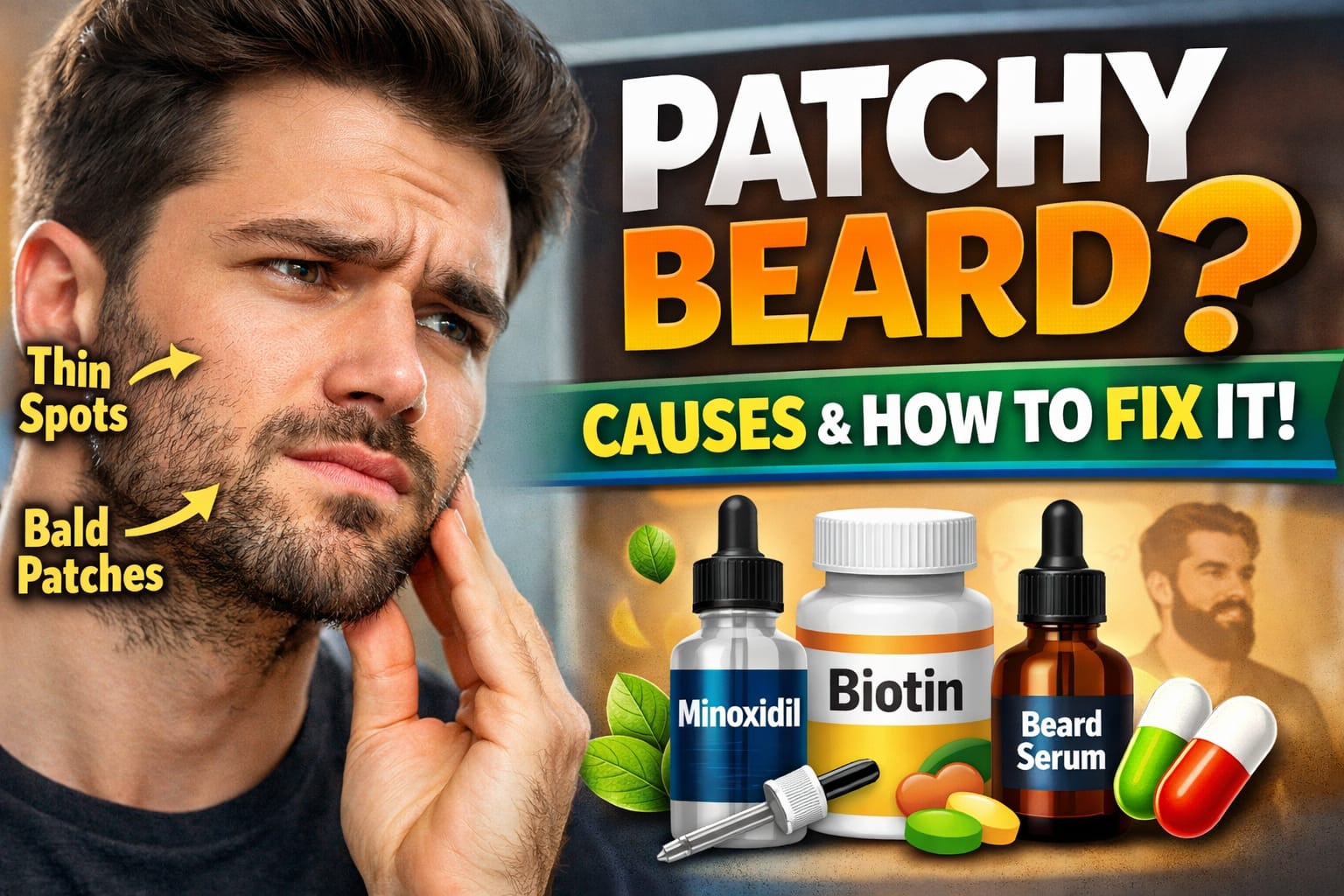
🧔 Patchy Beard: Why It Happens & How to Fix It
A patchy beard can be frustrating, especially when you see others growing thick, full beards effortlessly. If your beard grows unevenly, has bald spots, or looks incomplete, you’re not alone. Patchy beard growth is extremely common and, in most cases, completely fixable.
In this detailed guide, we’ll break down why patchy beard happens and how to fix it using medicines, tablets, serums, and natural methods — all explained in simple, practical language.
🤔 What Is a Patchy Beard?
A patchy beard means facial hair grows unevenly, leaving visible gaps on the cheeks, jawline, or chin. Some areas may grow thick hair while others stay thin or hairless.
This condition is not a disease. It is usually linked to genetics, hormones, lifestyle habits, or skin health.
🧬 Main Causes of Patchy Beard Growth
1️⃣ Genetics (The Biggest Reason)
Your genes decide where beard hair follicles are active. If your father or grandfather had a patchy beard, chances are you inherited the same pattern.
Genetics also controls:
- Beard density
- Hair thickness
- Growth speed
- Age at which beard fully develops
2️⃣ Hormonal Imbalance (Low Testosterone or DHT)
Beard growth depends on testosterone and its stronger form, DHT (Dihydrotestosterone). If your body doesn’t respond well to these hormones, beard growth becomes weak and patchy.
Signs of hormonal issues include:
- Low energy
- Low muscle mass
- Slow beard growth
- Thin facial hair
3️⃣ Poor Blood Circulation
Hair follicles need oxygen and nutrients. Poor blood flow to facial skin can slow down beard growth and create patches.
4️⃣ Nutrient Deficiencies
Lack of essential nutrients weakens hair follicles.
Common deficiencies linked to patchy beard:
- Biotin
- Vitamin D
- Vitamin B12
- Zinc
- Iron
5️⃣ Stress and Poor Sleep
Chronic stress increases cortisol, which interferes with testosterone production. Poor sleep further damages hormone balance.
6️⃣ Skin Problems
Conditions like dandruff, fungal infection, acne, or clogged pores can block beard follicles and stop growth.
🛠️ How to Fix Patchy Beard (Step-by-Step)
✅ 1. Give It Time
Many men panic too early. Beard development is slow. Let your beard grow for at least 8–12 weeks before judging its fullness.
✅ 2. Use Proven Beard Growth Serums
🔹 Minoxidil 5% Solution or Foam
Minoxidil is the most researched solution for stimulating hair follicles.
- Improves blood circulation
- Activates dormant follicles
- Encourages thicker beard growth
Popular brands: Tugain 5%, Morr F 5%, Mintop 5%
🔹 Peptide-Based Beard Serums
These are non-drug options that nourish follicles.
Look for serums containing:
- Redensyl
- Capixyl
- Procapil
They are safer for long-term use and suitable for sensitive skin.
✅ 3. Beard Growth Tablets & Supplements
💊 Biotin Tablets
Biotin strengthens hair and supports keratin production.
Common dosage: 5–10 mg daily
💊 Multivitamins for Hair
Hair supplements often contain:
- Biotin
- Zinc
- Vitamin E
- Vitamin B Complex
Popular examples: Hairbless, Keraglo Men, Follihair
✅ 4. Natural Oils & Massage
🌿 Castor Oil
Rich in ricinoleic acid, improves blood flow.
🌿 Coconut Oil + Vitamin E
Moisturizes skin and prevents follicle blockage.
🌿 Onion Juice (Weekly)
Boosts sulfur content and improves circulation.
✅ 5. Fix Your Diet
Eat beard-friendly foods:
- Eggs
- Nuts & seeds
- Leafy greens
- Fish
- Fruits rich in Vitamin C
A balanced diet directly affects beard quality.
✅ 6. Improve Lifestyle Habits
- Sleep 7–8 hours daily
- Exercise regularly
- Avoid smoking
- Reduce stress
- Limit junk food
❌ Common Myths About Patchy Beard
- ❌ Shaving makes beard thicker (false)
- ❌ Beard oil alone can grow beard (false)
- ❌ Patchy beard means infertility (false)
⏳ How Long Does It Take to Fix a Patchy Beard?
Results vary, but generally:
- 4–6 weeks: Improved texture
- 3 months: Visible filling of patches
- 6 months: Significant improvement
🧔 Styling Tips for Patchy Beards
- Go for short stubble
- Define neckline properly
- Use beard trimmers wisely
- Blend thin areas naturally
📌 Final Thoughts
A patchy beard is not a failure — it’s a phase. With patience, the right products, healthy habits, and time, most men see major improvement.
If your beard growth doesn’t improve after consistent effort, consult a dermatologist to rule out hormonal or skin issues.
Remember: Confidence matters more than beard density.