
A sharp jawline has become a symbol of fitness, confidence, and youth. From fitness influencers to movie stars, a defined jawline is often associated with good health and attractiveness. This rising interest has led many people to search for jawline exercises that promise visible facial definition without surgery or expensive cosmetic procedures.
But do jawline exercises actually work? Or are they just another internet trend? To answer this honestly, we need to look at anatomy, muscle physiology, fat distribution, and real scientific evidence.
This article explores jawline exercises from a scientific perspective, explains how facial muscles work, what results are realistic, and how to practice these exercises safely and effectively.
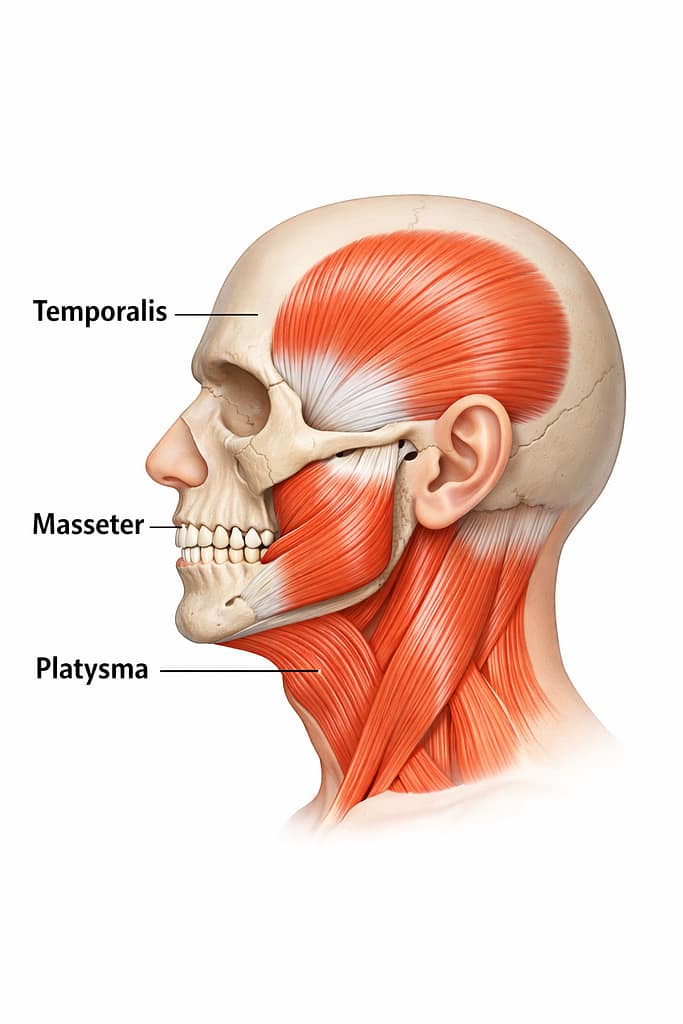
Understanding the Jawline: Anatomy Matters
Before discussing exercises, it is important to understand what shapes the jawline.
1. Bone Structure
Your jawline is primarily determined by your mandible, the lower jawbone. Bone shape and size are largely genetic and cannot be changed through exercise once growth is complete.
2. Facial Muscles
Several muscles influence the appearance of the jawline:
- Masseter – the main chewing muscle, one of the strongest muscles in the human body
- Temporalis – assists in jaw movement
- Platysma – a thin sheet-like muscle covering the neck and lower face
- Digastric muscles – involved in opening the jaw
Exercises can strengthen these muscles, which may slightly improve firmness and definition.
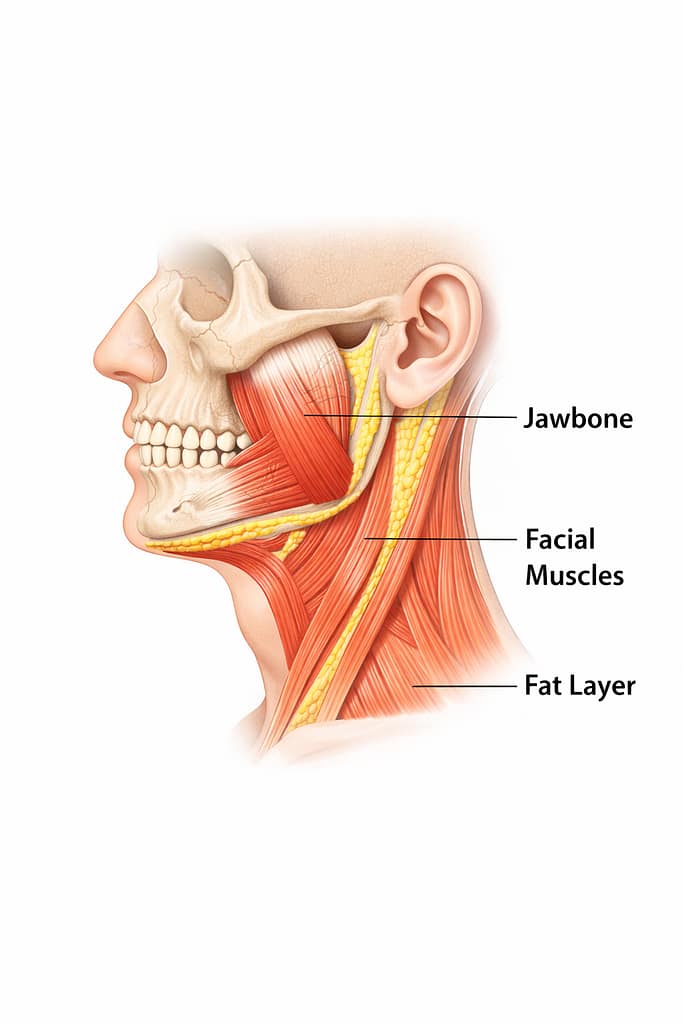
3. Fat Distribution
Subcutaneous fat around the chin and neck significantly affects jawline visibility. Facial fat is influenced by genetics, age, hormones, and overall body fat percentage.
4. Skin Elasticity
Collagen and elastin determine how tight or saggy the skin appears. Aging reduces both, which impacts jawline sharpness.
The Science Behind Facial Exercises
Facial exercises are often grouped under facial yoga or myofunctional therapy. Scientifically, they work on the same principle as body workouts: repeated muscle contraction leads to hypertrophy (muscle growth) and improved muscle tone.
What Research Says
A notable study published in JAMA Dermatology observed middle-aged adults performing facial exercises for 20 weeks. Dermatologists rated participants as having fuller and more youthful facial appearance, particularly in the cheeks.
However, it is important to note:
- The study focused on facial fullness, not dramatic jawline reshaping
- Results were subtle, not transformative
- Fat loss was not targeted
Scientific consensus suggests facial exercises may improve muscle tone and firmness, but they cannot spot-reduce fat or change bone structure.
Can Jawline Exercises Reduce Face Fat?
This is one of the biggest misconceptions.
From a physiological standpoint, spot reduction is not supported by science. Fat loss occurs systemically, not locally. Doing jaw exercises will not selectively burn fat from the chin or neck.
What exercises can do:
- Improve muscle tone
- Enhance blood circulation
- Improve posture of neck and jaw
- Create the appearance of definition when body fat is reduced overall
Therefore, jawline exercises work best when combined with proper nutrition, hydration, and overall fat management.
Benefits of Jawline Exercises (Backed by Science)
While expectations should be realistic, jawline exercises do offer several proven benefits.
1. Improved Muscle Tone
Regular activation strengthens the masseter and surrounding muscles, making the jaw area feel firmer.
2. Better Jaw Function
Jaw exercises are often used in therapy for:
- Temporomandibular joint (TMJ) disorders
- Jaw stiffness
- Bruxism (teeth grinding)
3. Enhanced Blood Circulation
Increased blood flow supports skin health and may contribute to a healthier glow.
4. Improved Posture
Many jawline exercises involve neck alignment, reducing forward head posture that worsens double chin appearance.
5. Mind-Muscle Awareness
Consistent practice improves control over facial muscles, similar to physical therapy.
Scientifically Safe Jawline Exercises
Below are jawline exercises commonly recommended by physiotherapists and facial muscle specialists.
1. Chin Lift Exercise
How to do it
- Sit or stand upright
- Tilt your head upward toward the ceiling
- Pucker your lips as if kissing the ceiling
- Hold for 5 seconds
- Repeat 10 to 15 times
Science angle
This movement engages the platysma muscle, which plays a role in neck and jaw firmness.
2. Jaw Resistance Exercise
How to do it
- Place your fist under your chin
- Open your mouth slowly while applying gentle resistance
- Hold for 3 to 5 seconds
- Close mouth slowly
- Repeat 10 times
Science angle
This activates the digastric and masseter muscles, improving functional strength.
3. Vowel Stretch Exercise
How to do it
- Open your mouth wide
- Pronounce exaggerated “O” and “E” sounds
- Hold each position for 3 seconds
- Repeat 15 times
Science angle
This exercise activates multiple facial muscle groups and improves neuromuscular coordination.
4. Cheek Lift with Smile Resistance
How to do it
- Smile as wide as possible
- Place fingers lightly on cheeks to add resistance
- Hold for 5 seconds
- Relax and repeat 10 times
Science angle
Engages zygomatic and jaw-supporting muscles, indirectly improving lower face tone.
5. Neck Curl-Up
How to do it
- Lie on your back
- Lift your head slightly and look toward your toes
- Hold for 5 seconds
- Repeat 10 times
Science angle
This strengthens the suprahyoid muscles and improves neck-jaw transition appearance.
How Often Should You Do Jawline Exercises?
From a physiological recovery perspective:
- Frequency: 4 to 5 days per week
- Duration: 10 to 15 minutes per session
- Consistency: Minimum 6 to 8 weeks for visible firmness
Overtraining facial muscles can lead to fatigue, jaw pain, or headaches, especially for people prone to TMJ issues.
Jawline Exercises vs Chewing Gum
Chewing gum is often marketed as a jawline workout, but science offers a mixed view.
Pros
- Activates masseter muscles
- Improves saliva production
- Helps jaw mobility
Cons
- Overuse can worsen TMJ disorders
- Can cause jaw asymmetry
- Leads to muscle overdevelopment in some cases
Jawline exercises offer controlled and balanced muscle engagement, making them safer than excessive gum chewing.
Lifestyle Factors That Enhance Jawline Results
Exercises alone are not enough. Scientific evidence supports a holistic approach.
1. Nutrition
- Adequate protein supports muscle tone
- Reduced sugar intake lowers inflammation
- Sodium control reduces facial bloating
2. Hydration
Dehydration increases water retention and puffiness in the face.
3. Sleep
Poor sleep elevates cortisol, promoting fat storage around the face and neck.
4. Posture
Forward head posture weakens neck muscles and blurs jawline definition.
What Jawline Exercises Cannot Do
To set realistic expectations:
- They cannot change jawbone shape
- They cannot remove significant fat deposits
- They cannot replace medical or cosmetic procedures
- They do not produce overnight results
Their role is supportive and preventive, not transformative.
Are Jawline Exercises Safe?
For most people, yes. However, individuals with the following should consult a professional:
- TMJ disorders
- Chronic jaw pain
- Recent dental surgery
- Cervical spine issues
Pain is a warning sign, not progress.
Final Verdict: Do Jawline Exercises Work?
From a scientific standpoint, jawline exercises:
- Improve muscle tone
- Enhance facial control
- Support jaw health
- Improve appearance subtly over time
They are most effective when combined with proper lifestyle habits and realistic expectations.
Jawline exercises are not a miracle solution, but they are a low-risk, cost-free method to support facial health and definition when practiced correctly and consistently.