
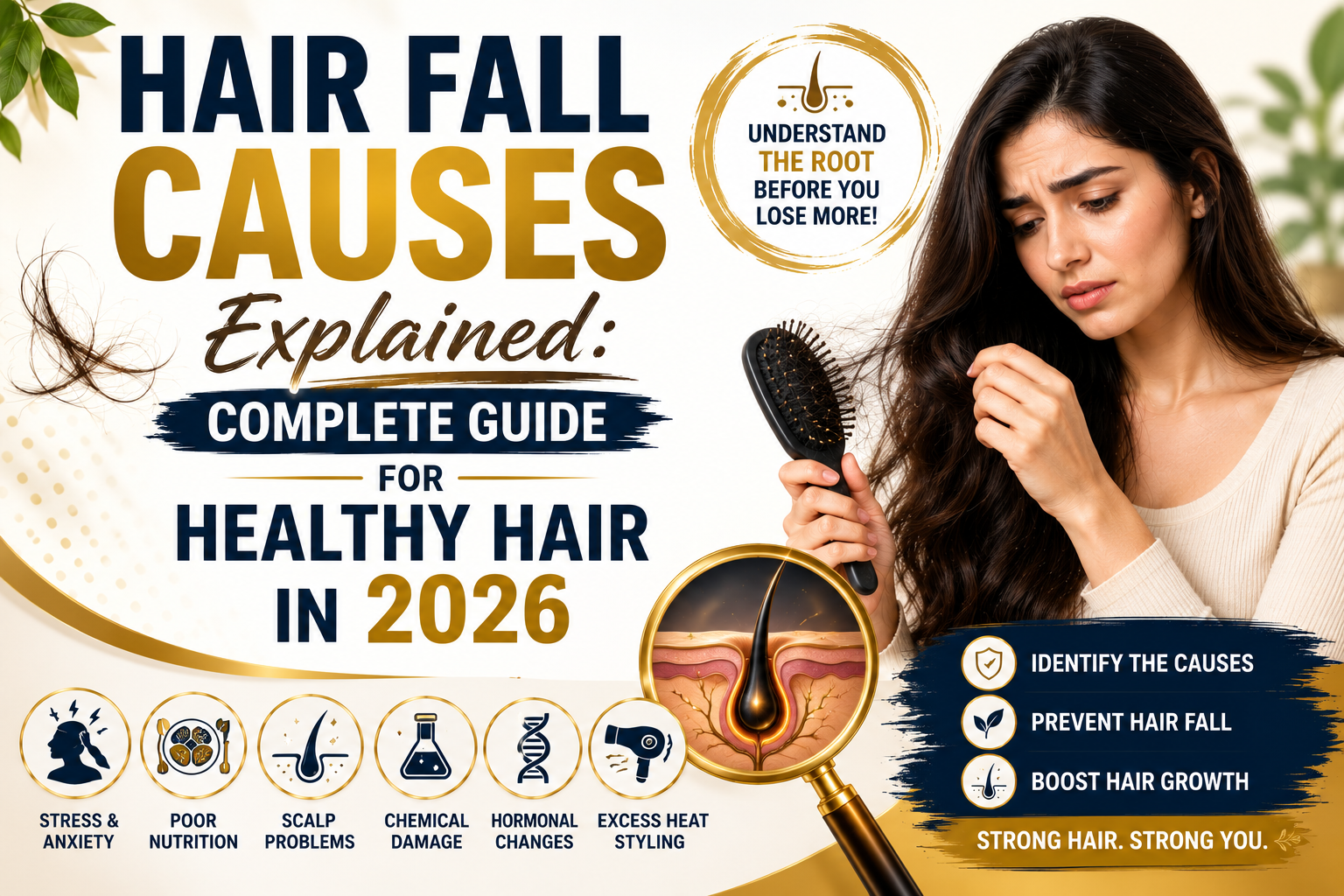
Hair Fall Causes Explained: Complete Guide for Healthy Hair in 2026
Hair fall is a top concern in 2026. Changing lifestyles, stress, poor diet, and environmental damage often lead to thinning hair, weak roots, and excessive shedding. Understanding the real reasons behind hair loss is your first step toward natural, healthy regrowth.
Hair loss can severely impact your confidence. In most cases, the problem develops slowly due to several hidden factors. You might notice extra hair shedding in the shower, while others experience gradual thinning near the hairline or crown.
This guide will explain the most common causes of hair loss. You will also discover warning signs, prevention methods, and the daily habits required to build stronger hair.
What is Normal Hair Fall?
Losing some hair every day is entirely normal. The average person naturally sheds between 50 to 100 hairs daily. However, when this shedding becomes highly noticeable, it signals an underlying issue.
1. Poor Nutrition and Hair Loss
Nutritional deficiency is a leading cause of weak hair. Your hair roots demand a steady supply of protein, vitamins, minerals, and healthy fats to thrive.
Essential Nutrients for Hair Growth
- Protein
- Iron
- Vitamin D
- Biotin
- Zinc
- Omega-3 fatty acids
Skipping meals, extreme crash dieting, and consuming highly processed foods will slowly starve and weaken your hair follicles.
2. Stress and Mental Pressure
Emotional and physical stress severely disrupts the natural hair growth cycle. High stress levels push active hair follicles into a resting phase, which leads to sudden shedding a few months later.
- Lack of deep sleep
- Intense work pressure
- Chronic anxiety
- Emotional trauma
- Physical exhaustion
3. Excessive Heat Styling
Daily use of straighteners, curling irons, and blow dryers strips moisture from your hair. This weakens the strands and causes severe breakage.
Warning Signs of Heat Damage
- Dry, rough texture
- Visible split ends
- Frequent hair breakage
- Loss of natural shine
- Brittle hair strands
Limit heat styling and always use a protectant to maintain your hair’s natural strength.
4. Hormonal Imbalances
Hormonal shifts drastically change hair growth patterns in both men and women. These imbalances often cause a slow, gradual thinning over time.
- Pregnancy and postpartum changes
- Thyroid disorders
- PCOS-related thinning
- Menopause
- Age-related hormonal shifts
5. Harsh Chemical Products
Heavy chemical treatments—like bleaching, rebonding, and frequent coloring—destroy scalp health. Even strong, sulfate-heavy shampoos can strip away protective oils and weaken your roots.
6. Scalp Infections and Dandruff
Hair simply cannot grow on an unhealthy scalp. Dandruff, fungal infections, extreme oil buildup, and inflammation choke your follicles.
- Persistent itching
- Visible flaking
- Scalp redness
- Excessive oil production
- Tenderness or sensitivity
Maintaining excellent scalp hygiene is crucial for stopping natural hair fall.
7. Tight Hairstyles (Traction Alopecia)
Tight ponytails, top knots, and braids put constant pulling pressure on your roots. Over time, this daily tension physically damages the hair follicle, leading to permanent thinning, especially around the hairline.
8. Genetics and Family History
Your DNA heavily influences your hair’s thickness and growth cycle. If baldness or thinning runs in your family, you might experience gradual hair loss much earlier than expected.
9. Lack of a Proper Hair Care Routine
Ignoring basic maintenance allows everyday damage to accumulate, slowly destroying your hair’s elasticity and strength.
The Ideal Hair Care Routine
- Weekly nourishing oil massages
- Using a mild, clarifying shampoo
- Washing with lukewarm, not hot, water
- Getting regular trims to stop split ends
- Incorporating targeted serums or dermarolling (if advised)
- Drinking plenty of water daily
10. Environmental Pollution
Urban living takes a toll on your hair. Daily exposure to dust, heavy pollution, harsh UV rays, and hard water creates oxidative stress that slowly degrades hair quality.
Natural Tips to Reduce Hair Fall
- Massage your scalp regularly to boost blood flow.
- Apply natural masks like aloe vera for hydration.
- Increase your daily protein intake.
- Practice meditation or yoga to lower stress.
- Ensure you get 7-8 hours of restful sleep.
- Avoid heavy chemical styling treatments.
- Air-dry your hair whenever possible.
When Should You Consult a Professional?
Schedule a visit with a dermatologist or trichologist if you experience:
- Sudden, clumpy hair loss
- Smooth bald patches
- Painful scalp irritation or sores
- Severe, unbreakable dandruff
- Rapid thinning over a few weeks
Explore more beauty and wellness tips at Naturaviibe Skin Care.
For advanced medical insights into hair health, visit Healthline Beauty & Skin Care.
Frequently Asked Questions
Can stress actually cause hair fall?
Yes. Prolonged stress disrupts your hair’s natural growth cycle, forcing follicles to shed prematurely.
Which vitamin deficiencies lead to hair thinning?
Low levels of Iron, Vitamin D, and Biotin, alongside poor protein intake, are the most common nutritional culprits behind weak hair.
How long does it take to stop hair fall naturally?
Because hair grows slowly, visible improvements usually take three to six months of consistent nutritional and lifestyle changes.
Final Thoughts
Experiencing hair fall rarely stems from just one issue. Poor nutrition, high stress, pollution, heat damage, and hormonal imbalances usually combine to weaken your hair over time.
Restoring your hair requires patience and a balanced approach. By improving your daily habits, upgrading your scalp care routine, and eating a nutrient-dense diet, you can significantly improve your hair’s thickness and strength.
Explore More Beauty & Hair Care Guides
Discover the best natural wellness, skincare, and grooming routines for a healthier lifestyle in 2026.
Read More Articles