
7 Best Natural Supplements for Better Sleep (2026 Guide)
A Science-Backed Guide to Supporting Your Circadian Rhythm Naturally
We have all been there: staring at the ceiling at 2:00 AM, exhausted but completely unable to shut off our racing minds. In a fast-paced world filled with blue light, chronic stress, and late-night caffeine, achieving deep, restorative rest has become increasingly difficult. This is why incorporating stress management into your routine is highly recommended by experts.
While many turn to over-the-counter or prescription sleep aids, some people report grogginess or disrupted REM sleep. If you are looking to explore holistic options, discovering the best natural supplements for better sleep may be a helpful alternative. Rather than acting as heavy sedatives, these natural compounds are often studied for their potential to help lower stress, promote relaxation, and gently support your body’s transition into rest.
⚡ Quick Answer: Popular Holistic Sleep Aids
Some of the most researched holistic options include Magnesium Glycinate (studied for muscle relaxation), Ashwagandha (often used to help manage evening cortisol), L-Theanine (to support mental calmness), and Tart Cherry Extract (a natural source of melatonin).
Natural supplements can interact with medications and may not be safe for everyone. Always consult a healthcare professional before use, especially if you fall into these categories:
- Pregnancy or Nursing: Many herbs lack sufficient safety data for fetal development.
- Kidney Issues: High doses of certain minerals, like magnesium, may be difficult for compromised kidneys to process.
- Taking Medications: Herbs like Ashwagandha and Valerian can interact with thyroid meds, blood thinners, and prescription sedatives.
Why Many Choose Natural Options Over Prescriptions
To understand why holistic options are often recommended, it helps to look at how sleep works. Restorative sleep typically requires a delicate balance of neurotransmitters—such as an increase in GABA (a calming chemical) and Melatonin, alongside a decrease in Cortisol (a hormone associated with stress). Maintaining a healthy diet is believed to provide the baseline nutrients needed for this process.
While prescription medications can be highly effective for clinical insomnia, some users report feeling a “hangover” effect the next morning, prompting many to look for gentler alternatives.
✅ Pros of Natural Options
- May align better with the body’s natural rhythms
- Generally considered to have a lower risk of dependency
- Often associated with fewer next-day grogginess effects
- May offer complementary nervous system benefits
❌ Cons of Natural Options
- Results may vary and take longer to appear
- Quality heavily depends on the manufacturer
- Risk of potential drug interactions
- Not a substitute for treating severe medical insomnia
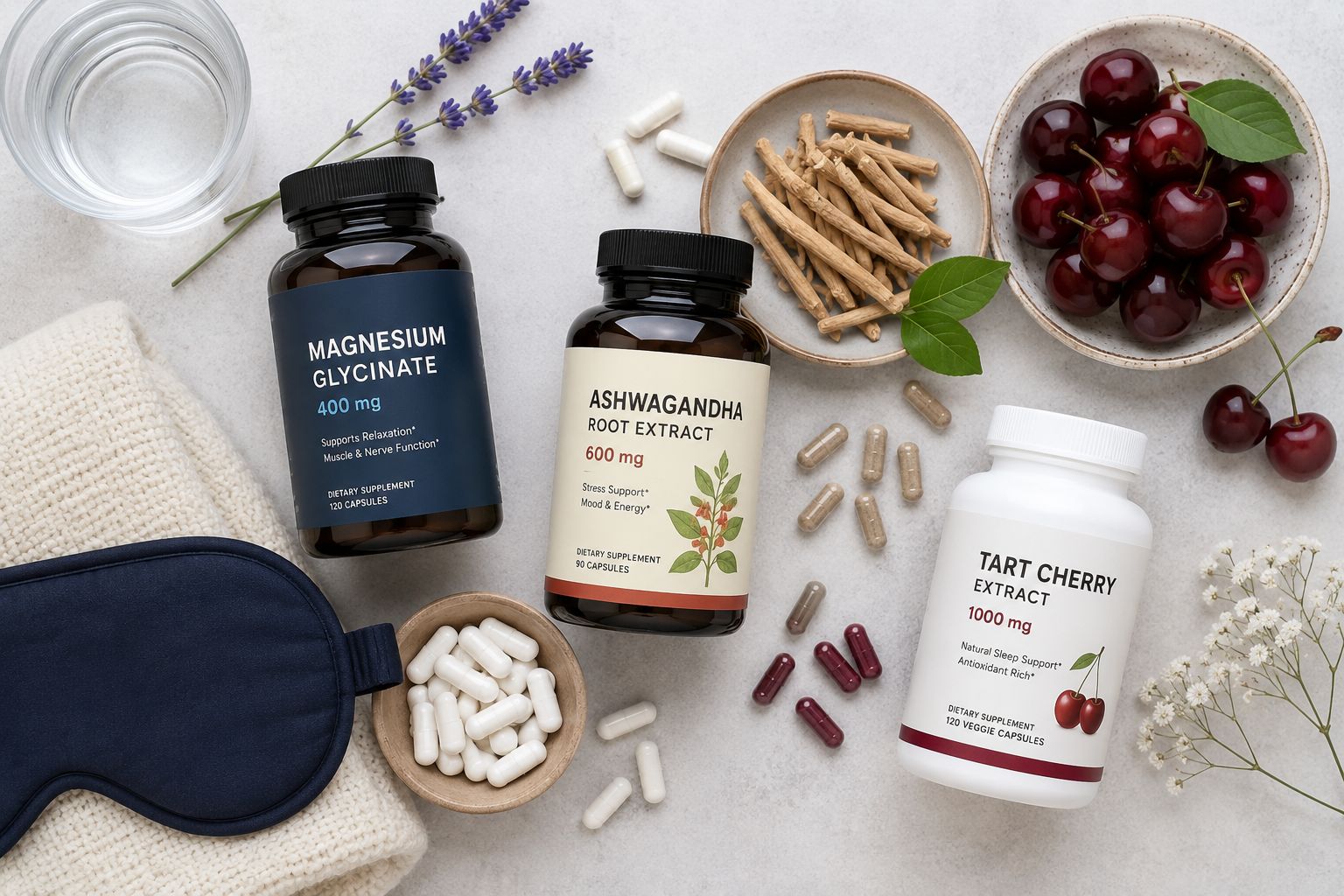
Comparison: Top 7 Natural Supplements at a Glance
| Supplement | Often Used For | General Timing | Scientific Evidence Level |
|---|---|---|---|
| Magnesium Glycinate | Supporting physical relaxation | 1 hour before bed | High |
| Ashwagandha | Stress management, cortisol support | Late afternoon/evening | Moderate to High |
| L-Theanine | Promoting mental calmness | 30 mins before bed | Moderate to High |
| Tart Cherry | Natural melatonin support | 1 hour before bed | Moderate |
| Valerian Root | Supporting the transition to sleep | 1-2 hours before bed | Moderate |
| Apigenin (Chamomile) | Winding down, mild relaxation | 1 hour before bed | Moderate |
| Melatonin | Jet lag, shift work adjustment | 30 mins before bed | High (dosage specific) |
Deep Dive: The Best Natural Supplements for Better Sleep
1. Magnesium (The Relaxation Mineral)
Magnesium is an essential nutrient involved in over 300 enzymatic reactions. According to research published on PubMed (NIH), magnesium supplementation has been studied for its potential to improve subjective measures of insomnia, such as sleep efficiency.
Choosing the Right Form: Not all magnesium is the same. For sleep, many wellness experts suggest exploring Magnesium benefits through Magnesium Glycinate, as it is highly bioavailable and is believed to offer calming effects without typically acting as a laxative.
- Commonly Studied Dosage: 200mg to 400mg of Magnesium Glycinate, taken roughly 1 hour before bed.
2. Ashwagandha (The Stress Adaptogen)
Sometimes, sleep difficulties are closely tied to stress. Clinical trials featured in sleep literature suggest that Ashwagandha root extract may help support healthy serum cortisol levels.
By potentially assisting the body in managing its stress response, it may help you feel more prepared to transition into sleep. You can read more about this herb in our dedicated Ashwagandha guide.
- Commonly Studied Dosage: 300mg to 600mg of KSM-66 extract in the late afternoon or early evening.
3. L-Theanine (The Zen Amino Acid)
L-Theanine is a unique amino acid found naturally in green tea leaves. Research indicates it may help support an increase in alpha brain waves—which are often dominant during deep meditation and wakeful relaxation.
- Commonly Studied Dosage: 100mg to 200mg, taken 30 to 60 minutes before bedtime.

4. Tart Cherry Extract (Nature’s Melatonin Source)
While synthetic melatonin supplements are popular, Tart Cherry Extract offers a more subtle, natural alternative. Research detailed by the Sleep Foundation highlights that Montmorency tart cherries are one of the richest natural food sources containing bioavailable melatonin, which may support better rest.
- Commonly Studied Dosage: 1 cup of unsweetened juice or a 500mg capsule, taken 1 hour before bed.
5. Valerian Root (The Traditional Herb)
Valerian root contains compounds that are believed to inhibit the breakdown of GABA in the brain. This may result in a mild calming effect, making it a popular choice for people looking to support their initial transition to sleep. Interestingly, a balanced gut microbiome might influence how herbs are processed, pointing to the benefits of knowing how to improve gut health naturally.
- Commonly Studied Dosage: 300mg to 600mg of extract, taken 1 to 2 hours before bed.
6. Apigenin (Found in Chamomile)
Drinking chamomile tea before bed is a timeless home remedy, often attributed to a flavonoid called Apigenin. It is thought to interact with specific receptors in the brain, which may help decrease mild tension and support the natural sleep process.
- Commonly Studied Dosage: 50mg of Apigenin (or 2 strong cups of chamomile tea) an hour before bed.
7. Melatonin (Use With Care)
Melatonin is a hormone that signals to your brain that it is nighttime. While it can be highly effective for resetting a biological clock (like adjusting to jet lag or shift work), some experts warn that taking high doses every night may disrupt your body’s natural sleep architecture over time.
- Commonly Studied Dosage: Micro-doses of 0.3mg to 1mg, taken 30 minutes before bed. Many experts advise avoiding higher doses unless directed by a doctor.
The “Sleep Stack”: A Synergistic Approach
Some wellness advocates discuss a “sleep stack”—combining specific supplements intended to target different supportive pathways simultaneously. A commonly discussed stack includes:
- Magnesium Glycinate: For supporting physical relaxation.
- L-Theanine: For supporting a calm mind.
- Apigenin: For general tension reduction.
Supplements Are Only One Piece of the Puzzle
Even the most popular holistic remedies are best viewed as additions to, not replacements for, good sleep hygiene. To help these natural options work effectively, it is generally recommended to pair them with foundational habits, such as a consistent morning routine to help anchor your circadian rhythm.
If you haven’t already, consider exploring our guide on how to improve sleep quality naturally, which covers important practices like managing evening light exposure and optimizing bedroom temperature.
🔑 Key Takeaways for Holistic Rest
- Personalize Your Approach: Magnesium is often chosen for physical tension, while Ashwagandha is popular for stress support.
- Mind the Dosage: High doses of synthetic melatonin (over 3mg) may disrupt sleep architecture for some individuals.
- Timing Matters: Natural options often need time to be digested and absorbed.
- Quality is Crucial: Look for third-party tested supplements to ensure purity and accuracy.
Frequently Asked Questions (FAQs)
Are natural sleep aids safe to take every night?
Many minerals and amino acids, like Magnesium Glycinate and L-Theanine, are generally considered safe for regular use by most healthy adults. However, herbal adaptogens like Ashwagandha are often suggested to be cycled, and consulting a doctor is always recommended.
Can I take Ashwagandha and Magnesium together?
Yes, they are frequently used together to complement one another. Studies suggest Ashwagandha may help support a healthy stress response, while Magnesium is known for supporting physical relaxation.