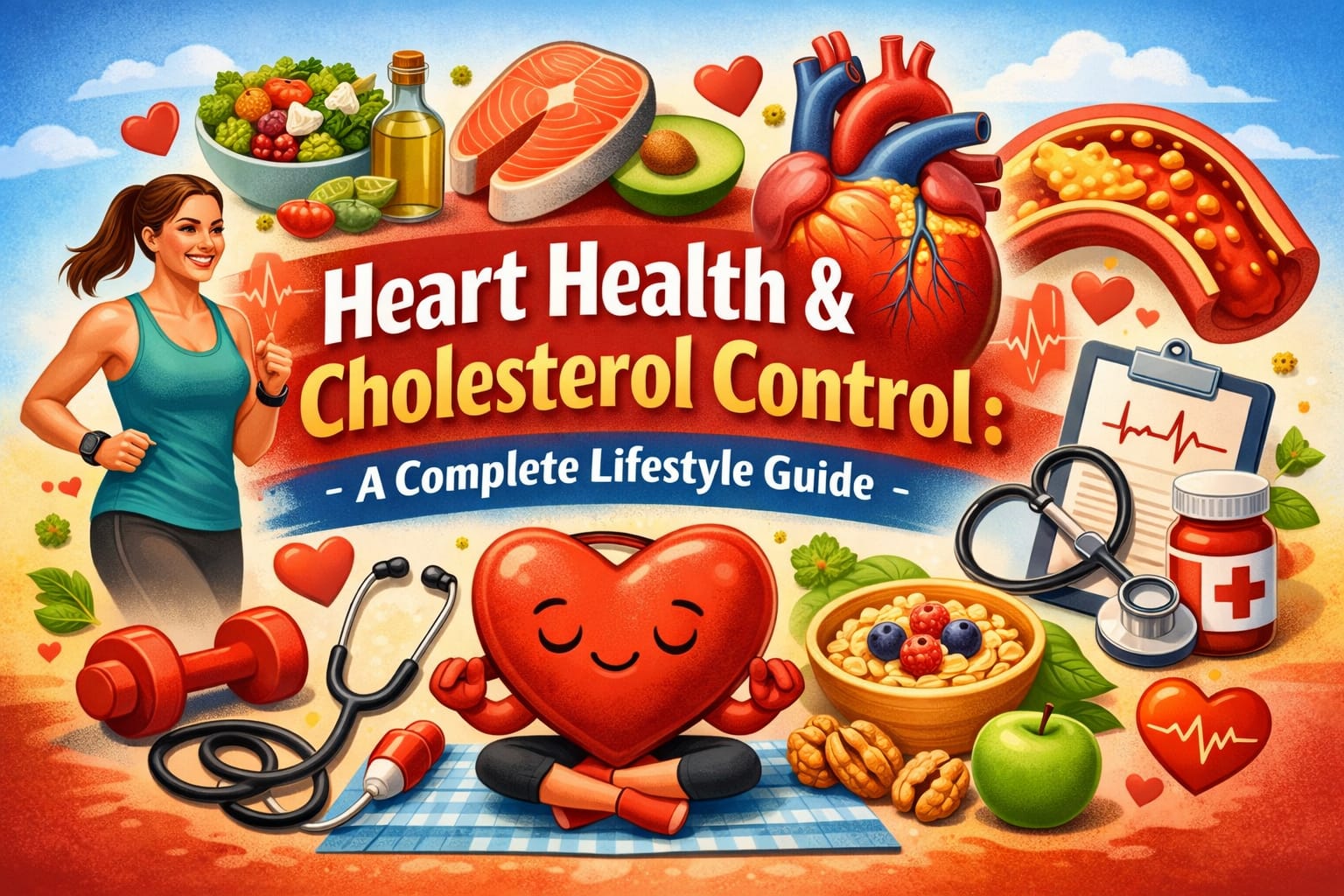
Heart Health and Cholesterol Control: A Complete Lifestyle Guide

Heart health is not just a medical topic—it is a reflection of how we live every single day. Modern lifestyles, unhealthy diets, stress, and lack of movement have made heart problems and high cholesterol common across all age groups.
The encouraging truth is that most heart-related issues are preventable. By understanding cholesterol and making simple lifestyle changes, you can protect your heart naturally and effectively.
Understanding the Role of the Heart
The heart is a strong muscle that pumps blood throughout the body, delivering oxygen and nutrients to every organ. A healthy heart ensures smooth blood circulation and overall well-being.
When cholesterol builds up inside arteries, blood flow slows down, forcing the heart to work harder. Over time, this increases the risk of serious conditions like heart attack and stroke.
What Is Cholesterol?

Cholesterol is a fat-like substance produced naturally by the liver. It is essential for hormone production and cell repair. Problems arise only when cholesterol levels become unbalanced.
Types of Cholesterol
- LDL (Bad Cholesterol): Causes plaque buildup in arteries.
- HDL (Good Cholesterol): Helps remove excess cholesterol from the blood.
- Triglycerides: High levels increase heart disease risk.
How High Cholesterol Damages the Heart

Excess cholesterol sticks to artery walls and forms plaques, narrowing blood vessels. This condition, known as atherosclerosis, restricts blood flow and increases the chances of:
- Chest pain (angina)
- Heart attack
- Stroke
- High blood pressure
Diet: The Foundation of Cholesterol Control
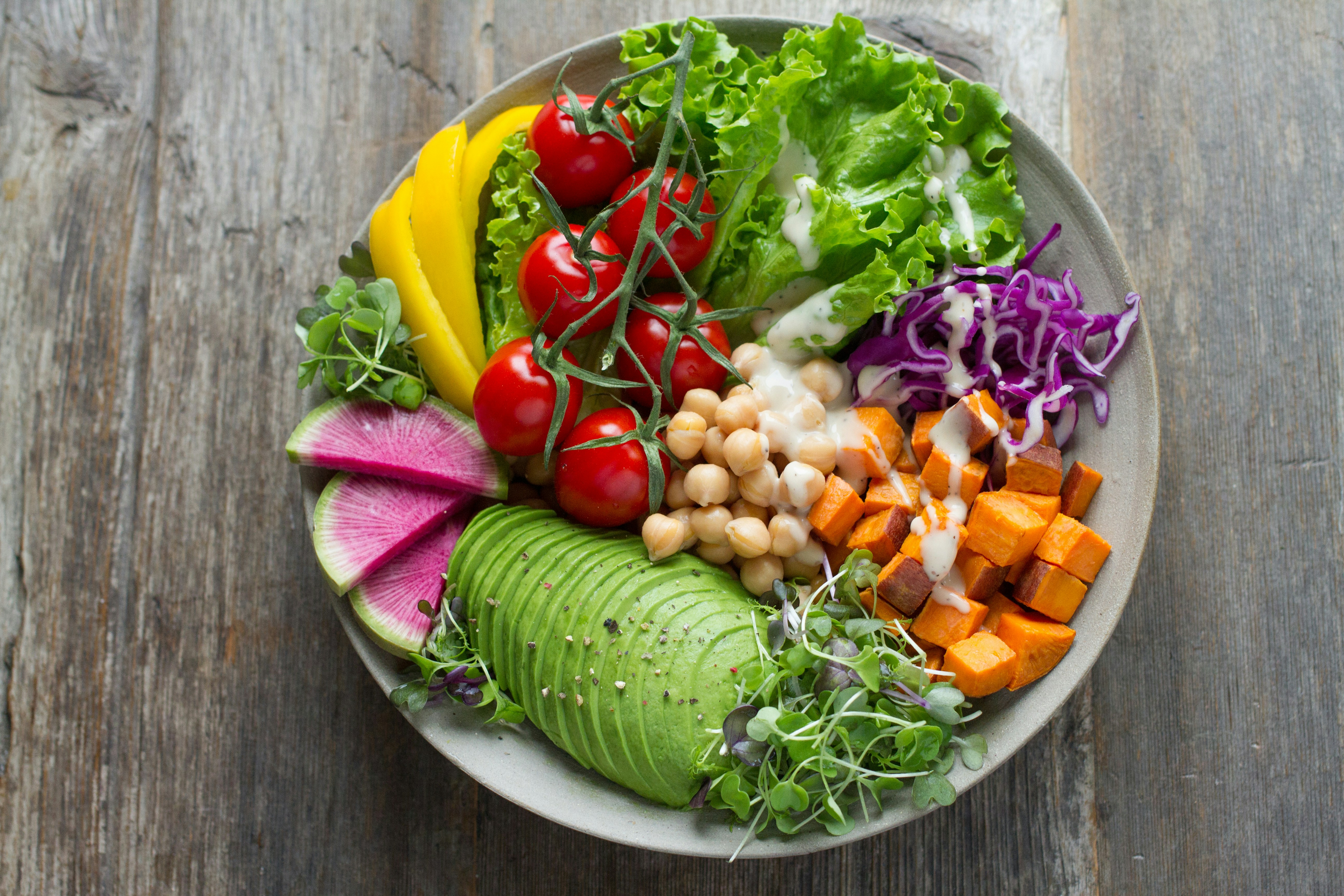
Food choices play a major role in controlling cholesterol. A heart-friendly diet focuses on natural, whole foods rather than strict restrictions.
Heart-Healthy Foods
- Whole grains like oats and brown rice
- Fresh fruits and vegetables
- Nuts and seeds in moderation
- Olive oil and healthy fats
- Fatty fish rich in omega-3
Foods to Limit
- Fried and processed foods
- Excess sugar and refined carbs
- Trans fats and junk food
Physical Activity and Heart Strength

Regular exercise strengthens the heart and improves cholesterol levels. It increases good cholesterol while reducing bad cholesterol naturally.
- Brisk walking
- Cycling or swimming
- Yoga and stretching
- Light strength training
Weight Management and Cholesterol Balance

Excess body fat, especially around the waist, is strongly linked to high cholesterol and heart disease. Maintaining a healthy weight reduces stress on the heart and improves overall metabolism.
Stress, Sleep, and Heart Health

Chronic stress and poor sleep negatively affect cholesterol and blood pressure. Relaxation, quality sleep, and mental balance are essential for a healthy heart.
- Practice deep breathing or meditation
- Get 7–8 hours of quality sleep
- Limit screen time before bed
Avoid Harmful Habits

Smoking and excessive alcohol intake significantly increase heart disease risk. Quitting these habits improves heart health faster than most people realize.
Importance of Regular Health Checkups

Routine cholesterol tests help identify risks early. Early action through lifestyle changes can prevent the need for medication in many cases.
Final Thoughts
Heart health and cholesterol control are lifelong commitments. Small daily habits, when practiced consistently, can protect your heart and improve your quality of life.
Your heart works tirelessly for you—treat it with care, balance, and respect.