
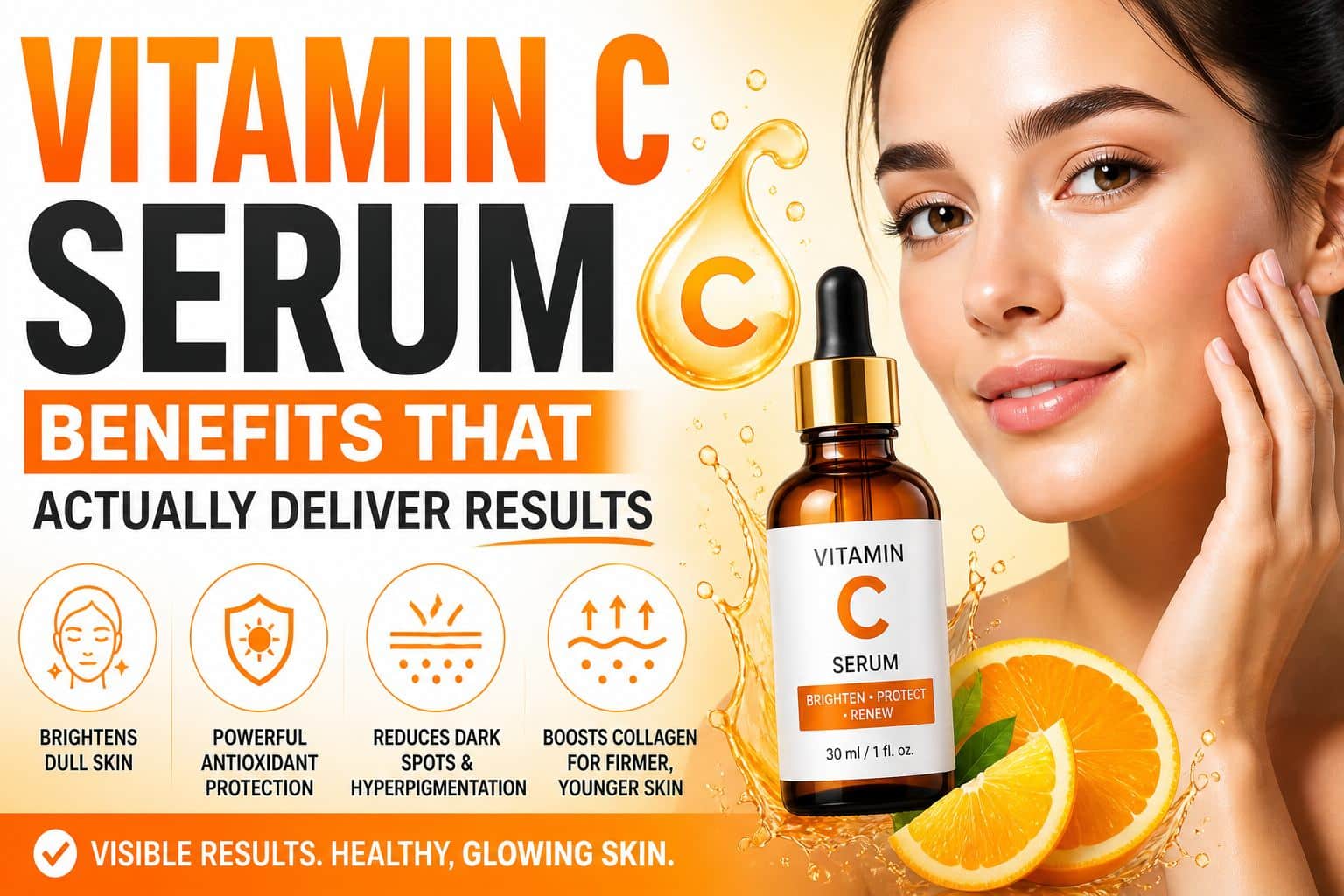
Vitamin C Serum Benefits That Actually Deliver Results
The first time I dug into Vitamin C Serum Benefits, I expected a list of lofty promises. Instead, what I found was a decade of personal trial and error that completely reshaped my morning routine. If you’ve ever felt burned by a product that promised brightness and delivered irritation, this is the deep dive you’ve needed.
Skincare shelves are overflowing with L-ascorbic acid this and THD ascorbate that. It’s easy to get lost. But when you strip away the marketing noise, the real advantages of a well-formulated vitamin C serum are undeniable — and they’re backed by more than just anecdotes. The catch? Not all serums are created equal, and understanding what makes one work means the difference between a glow that lasts three hours and a glow that transforms your skin over weeks.
Why Most Vitamin C Serums Fail (And How to Pick a Winner)
Walk into any beauty retailer and you’ll see dozens of bottles claiming to deliver Vitamin C Serum Benefits. Many contain pure ascorbic acid, which is notoriously unstable. Once exposed to light, air, or the wrong pH, it oxidizes before it ever touches your skin. I’ve tossed my fair share of amber bottles that turned from clear to dark orange — a sure sign the active had broken down. The first real step toward visible results is choosing a serum that uses stabilised forms like sodium ascorbyl phosphate, ascorbyl glucoside, or the modern 3-O-ethyl ascorbic acid. These derivatives actually stay active long enough to work.
pH matters deeply. Effective formulas sit between 3.0 and 3.5 for pure ascorbic acid. That acidic environment helps penetration but can also cause stinging for sensitive skin. This is exactly why newer formulations combine vitamin C with ferulic acid and vitamin E — a trio that not only stabilises the antioxidant but boosts its photoprotective power. A classic 2005 study (still referenced constantly by dermatologists) showed that this combination doubled the protection against UV-induced cellular damage. So when you shop, ingredients synergy is the secret handshake.
💡 Quick Tip: Store your vitamin C serum in a cool, dark cabinet — not the bathroom. Humidity and temperature swings destroy antioxidants faster than you think.
The Real, Visible Vitamin C Serum Benefits
Let’s talk about what you’ll actually notice after consistent use — not six months later, but within the first few weeks. The most immediate of all Vitamin C Serum Benefits is the brightness shift. Your skin stops looking tired. That dull film, the one that hangs around no matter how much water you drink, begins to lift. This isn’t a temporary luminescence; it’s a reduction in accumulated oxidative stress.
After the brightness comes the evening out of skin tone. Post-acne marks, sun spots, and that faint patchiness on the forehead start to fade. Vitamin C interrupts melanin production by inhibiting the enzyme tyrosinase. It won’t bleach your skin, but it gently nudges it back toward its natural, even canvas. One of my friends — a lifelong skeptic — started using a 15% ethyl ascorbic acid serum after I shared some research. By week four, her sunspot (the one she’d named “Susan”) was noticeably softer. She’s now a convert.
Collagen support is the long game, and it’s equally important. Here’s where the deeper Vitamin C Serum Benefits emerge over months. Vitamin C is a critical cofactor for enzymes that stabilise and cross-link collagen molecules. Without adequate vitamin C in the dermis, collagen production sputters. Topical application doesn’t replace dietary intake, but it does create a localised antioxidant reservoir that shields existing collagen from degradation. The result over a year? Firmer, springier skin — especially around the mouth and jawline.
Sun Protection’s Best Ally (Not a Replacement)
No sunscreen, no party. But pairing your SPF with a potent vitamin C serum under it amplifies the shield. The antioxidant effect of L-ascorbic acid neutralises free radicals generated by UV rays that sneak past your sunscreen — because no SPF blocks 100% of radiation. This is where the phrase “topical antioxidant photoprotection” comes in. I remember reading about a clinical trial that demonstrated a significant reduction in erythema (sunburn) when vitamin C was applied before UV exposure. That sealed it for me.
This doesn’t mean you can skimp on sunscreen. It’s a partnership. Layering vitamin C under a broad-spectrum SPF 30+ creates a morning routine that actively prevents future pigmentation while treating existing discoloration. That’s the brilliant dual-action logic that makes dermatologists nod in approval.
How to Actually Use It So It Works
Mornings are your sweet spot. After cleansing, apply a few drops of your serum to dry skin. Let it absorb for 60-90 seconds before moving on to moisturiser and SPF. If your skin feels too tingly, you can buffer it by mixing a drop into your moisturiser, but that slightly dilutes efficacy. Using it at night is fine too, but you lose the photoprotective synergy.
Patience is the unsung requirement. Those dramatic before-and-after photos rarely happen in a week. Track your skin with a simple phone photo every Sunday morning, same light, no makeup. Around week three, you’ll see the shift: less redness, more uniformity. That’s the collection of Vitamin C Serum Benefits adding up. I’ve seen people give up on day ten because they expected a miracle. Stick with it.
Beyond the Bottle: Ingredients That Boost Absorption
Several cosmetic labs have turned their attention to penetration enhancers that maximise the delivery of vitamin C into the epidermis. Look for serums that include minimally occlusive glycols (like propanediol) or even a small amount of ethoxydiglycol. These help the active navigate the lipid barrier without causing irritation. A formula I personally rotate includes a touch of vegan squalane and aloe vera juice — the humectants pull water in while the antioxidant does its job.
Another overlooked aspect is the inclusion of soothing agents. Vitamin C can be harsh when you first start. Niacinamide used to be considered incompatible, but modern formulations have debunked that. A serum with both niacinamide and a stable vitamin C derivative can calm inflammation while brightening. Just introduce them slowly.
Ready to explore more skincare insights? Browse our full Skin category for guides on layering routines, ingredient deep dives, and honest reviews.
What About Sensitive Skin? The Gentle Entrance
Not everyone can jump into a 20% L-ascorbic acid serum without a flare-up. For reactive complexions, the Vitamin C Serum Benefits are still accessible through magnesium ascorbyl phosphate or ascorbyl glucoside. These water-soluble derivatives have a more neutral pH and cause less stinging. You trade a tiny bit of potency for tolerance — a worthy compromise if irritation was your barrier to entry. I’ve seen people with rosacea thrive on a 10% ascorbyl glucoside serum layered over a basic moisturiser.
A patch test is non-negotiable. Apply behind the ear or on the inner arm for three days. If no redness appears, you’re likely in the clear. And always introduce one new active at a time. If you’re using retinoids at night, vitamin C belongs in the morning; don’t layer them together unless your product has been specifically formulated for that combination.
Results I’ve Witnessed Firsthand (and What the Research Says)
A systematic review published in the Journal of Clinical and Aesthetic Dermatology looked at multiple studies and concluded that topical vitamin C significantly improves photodamage, wrinkles, and pigmentation when used for at least 12 weeks. You can read the full review here. The data echoes what I’ve seen in my own skin and in friends I’ve roped into this journey. After three months, fine lines around the eyes softened, and the stubborn pigmentation on my cheekbone — the one that survived three different acid toners — finally started breaking apart.
It’s these gradual, cumulative Vitamin C Serum Benefits that build real change. No filter, no gimmick. Just biochemistry doing its quiet work every morning.