
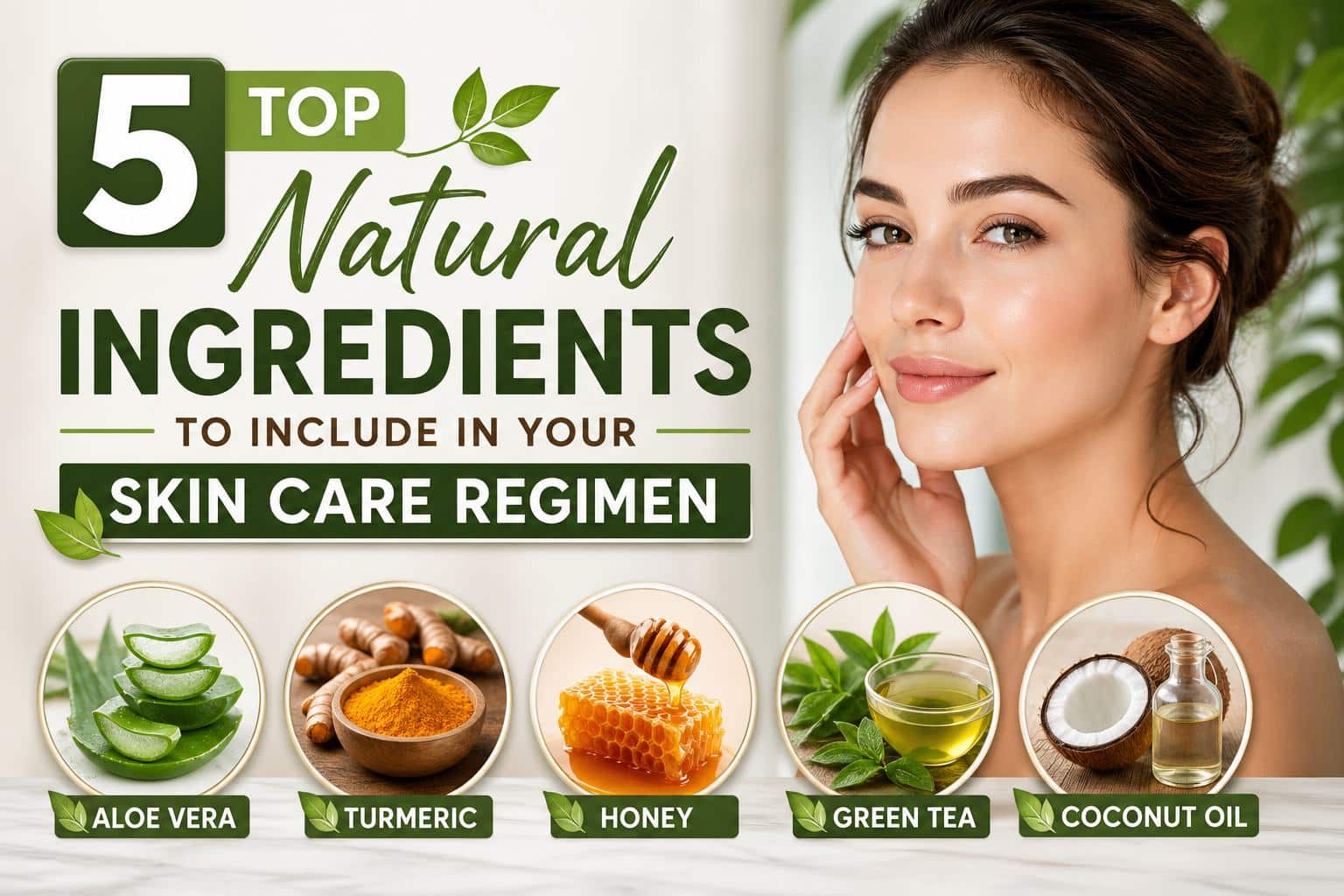
Top 5 Natural Ingredients to Include in Your Skin Care Regimen
Timeless botanicals your skin will truly love – backed by tradition and modern science.
There is a quiet revolution happening on bathroom shelves around the world. People are leaving behind formulas filled with synthetic fillers. Instead, they are turning to ingredients grown straight from the earth. The beauty of natural skincare goes beyond its simplicity. These raw elements work in profound harmony with our skin’s biology. Below, we explore five stand‑out natural ingredients. Each ingredient is chosen for its proven ability to hydrate, heal, brighten, and protect. They do this without harsh chemicals.
🌱 1. Aloe Vera – The Soothing Hydrator
Aloe vera is often the first plant people think of when they hear “natural skincare.” The clear gel inside its thick leaves is over 95% water. The remaining 5% is packed with vitamins, enzymes, minerals, and amino acids. These nutrients work together to calm inflammation and deliver intense moisture. Heavy creams often just sit on the skin’s surface. Aloe penetrates quickly instead. This makes it ideal for all skin types, especially oily and sensitive complexions.
Its true magic lies in polysaccharides. They form a protective film over the skin. This locks in hydration while allowing your skin to breathe. Do you struggle with post-sun redness, razor burn, or minor irritations? A thin layer of fresh aloe gel can reduce discomfort within minutes. Modern clinical research highlights its ability to speed up wound healing. It also stimulates collagen production. This turns the humble succulent into an anti-aging ally.
How to use it: Slice a leaf from a mature aloe plant. Scoop out the inner gel and blend it until smooth. Apply it directly as a 10-minute mask. You can also mix a teaspoon with rosehip oil for a night serum. Not everyone has a green thumb. If so, choose a store-bought gel listing aloe barbadensis leaf juice first. Ensure it contains minimal preservatives.
Precaution: Some individuals may experience a mild stinging. Always rinse if discomfort occurs. Avoid aloe latex (the yellow sap) which can be irritating.
✨ 2. Turmeric – The Golden Brightener
Turmeric has been a staple in Ayurvedic beauty rituals for centuries. The active compound curcumin is a potent antioxidant and anti-inflammatory agent. It tackles hyperpigmentation and dullness at once. Turmeric inhibits excess melanin production and neutralizes free radicals. Regular use can fade dark spots and even out skin tone. It also imparts a lit-from-within radiance.
What many don’t realize is that turmeric also helps balance sebum production. Try mixing it with gentle exfoliants like chickpea flour or yogurt. It draws out impurities from pores without stripping the skin’s natural barrier. The result is a clarified complexion that feels soft, not taut. Moderation is key, however. Too much turmeric can temporarily stain the skin yellow. This usually washes away with a second cleanse.
DIY face mask: Combine 1 teaspoon of organic turmeric powder with 2 tablespoons of plain Greek yogurt. Add a few drops of raw honey. Apply an even layer and leave on for 12–15 minutes. Rinse with lukewarm water using circular motions. The lactic acid in yogurt gently exfoliates, while honey delivers antibacterial benefits.
Precaution: Turmeric can stain fabrics and nails, so wear an old shirt and use a spoon to mix. If you have very fair skin, start with a smaller amount.
🍯 3. Raw Honey – Nature’s Humectant Healer
Not all honey is created equal. Raw, unpasteurized honey retains natural enzymes, antioxidants, and antimicrobial peptides. These make it a powerhouse for acne-prone and dehydrated skin. As a humectant, it draws moisture from the air into the skin. This keeps it plump and supple for hours. Its low pH and hydrogen peroxide activity inhibit acne-causing bacteria. It does this without disrupting the skin’s microbiome.
Raw honey is also rich in gluconic acid. This mild alpha-hydroxy acid gently loosens dead skin cells. It reveals a brighter surface over time. When used as a cleanser or mask, it leaves behind a luminous, cushiony feel. Few synthetic products can replicate this. Those with eczema or psoriasis often find relief from honey’s anti-inflammatory properties. Its wound-healing nature makes it a gentle treatment for distressed skin.
How to incorporate: Spread a thin layer of raw manuka or local wildflower honey over damp skin. Leave it on for 20 minutes, then rinse. For a soothing scrub, mix with finely ground oats and a drop of chamomile tea. Even dabbing a tiny amount on a blemish before bed can reduce redness by morning.
Precaution: Avoid if you have a known allergy to bee products. Always choose raw, cold‑processed honey to ensure enzymatic activity.
🍃 4. Tea Tree Oil – The Clarifying Essential
Tea tree oil is distilled from the leaves of the Australian Melaleuca alternifolia tree. It is a highly researched essential oil in dermatology. Its broad‑spectrum antimicrobial prowess targets problematic bacteria, fungi, and viruses. These can lead to breakouts, dandruff, and even minor infections. Benzoyl peroxide can be overly drying. Tea tree oil works gradually to reduce lesions and inflammation instead. It protects the skin barrier when used correctly.
The secret is its high content of terpinen‑4‑ol, a compound that calms redness while fighting acne pathogens. Studies compared 5% tea tree oil gel to standard acne treatments. They found comparable results with fewer side effects like peeling and stinging. It also helps regulate sebum. This makes it a versatile choice for hormonal acne and occasional stress-related breakouts.
Safe application: Never apply undiluted tea tree oil directly to your face as it can cause sensitization. Instead, mix 2 drops with a teaspoon of a carrier oil such as jojoba or argan. Dab onto blemishes with a clean cotton bud, or add a few drops to your regular clay mask. For body acne, a few drops in a bath or mixed into unscented lotion can work wonders.
Precaution: Perform a patch test behind the ear. Exposure to sunlight after application may increase sensitivity, so it’s best used in the evening.
🌹 5. Rosehip Oil – The Rejuvenating Elixir
Rosehip oil is pressed from the seeds of wild rose bushes. It brims with essential fatty acids, vitamin A, and vitamin C. This combination makes it a natural repair agent for sun damage, uneven texture, and fine lines. Its small molecular structure allows it to penetrate deeply. It delivers nutrients straight to the dermal layer where collagen and elastin reside.
Despite being an oil, rosehip is remarkably lightweight and non‑comedogenic. It actually helps balance oil production in individuals with combination skin, reducing the appearance of pores over time. Consistent use can soften surgical scars, stretch marks, and hyperpigmentation. It is a favorite for multi-targeted anti-aging treatments without prescription retinoids.
Application ritual: Cleanse and tone your face first. Press 3–4 drops of cold-pressed organic rosehip oil between your palms. Gently press it onto damp skin. Follow with a moisturizer if needed, though it often suffices on its own. For an added glow, mix a drop into your foundation or tinted sunscreen.
Precaution: Rosehip oil oxidizes quickly; store in a dark glass bottle away from direct light. If the scent turns rancid, it’s time to replace.
The real art of natural skincare lies in synergy. You might use aloe vera as a morning hydration base. Try a turmeric-honey mask twice a week. Spot-treat with tea tree oil at night, and seal it with rosehip oil. Listen to your skin – it will tell you when it needs calm, clarity, or deep restoration. These five ingredients are remarkably versatile. A little experimentation helps you build a regimen that feels nurturing and effective.
Ready to explore more skin‑loving ideas?
🌼 Visit Our Skin Care Hub(Discover fresh routines, ingredient deep‑dives, and wellness tips.)
© NaturaViibe – crafted with care for your natural beauty journey.
All content is written from personal experience and research. Always consult a dermatologist for persistent skin conditions.